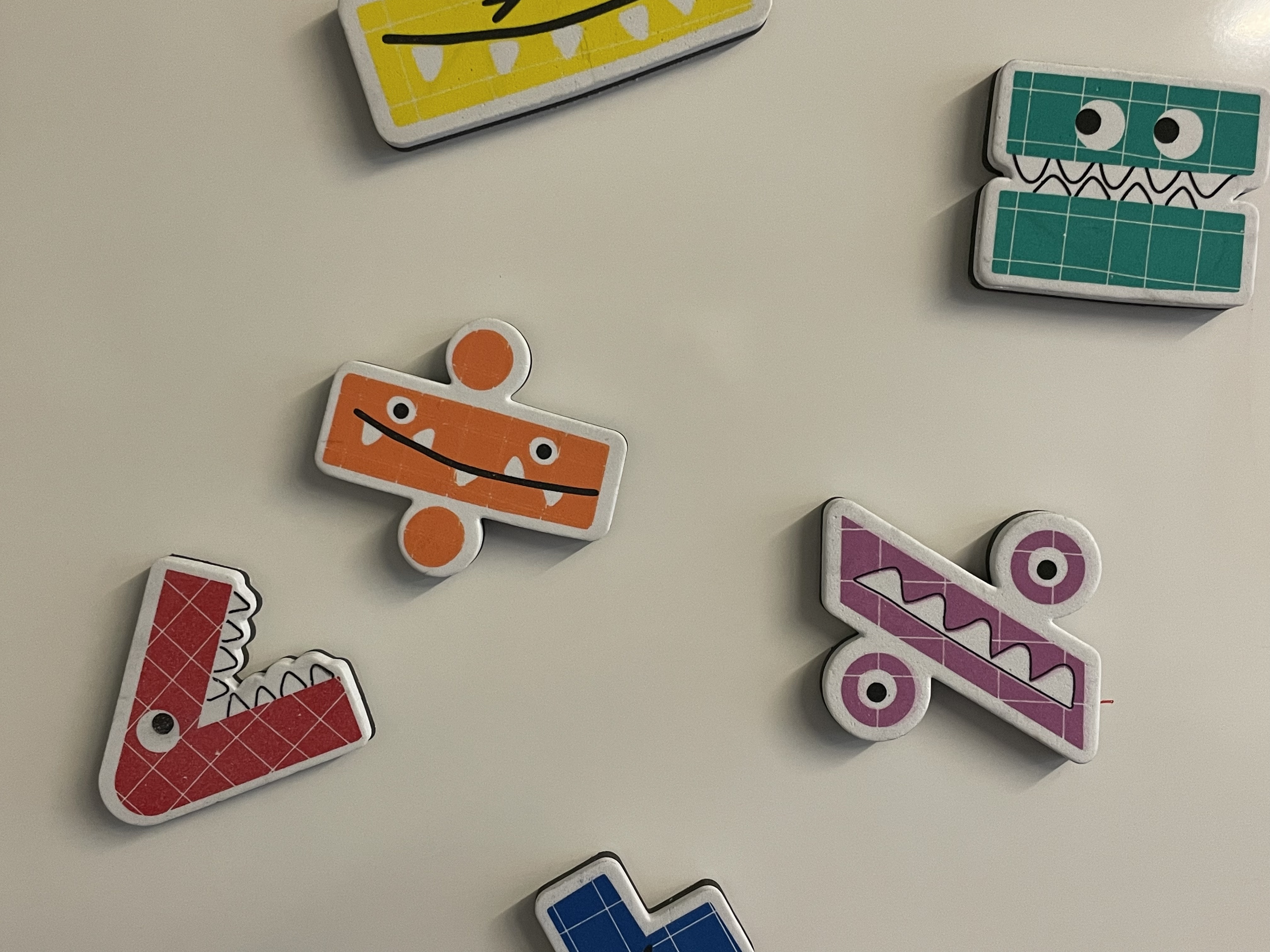
Here we are… coming up to the halfway point of the school year. You have probably already had at least one parent teacher conference by now. But how have they been doing since then? What support do you have in place? What are you doing over the break to help them so they don’t have learning loss? The second half of the school year can sometimes bring new challenges. This part of the year seems to be more inconsistent with the multiple breaks and if you are in the colder climates, snow days. Not to mention, the content is more challenging as the year progresses as well as builds on the year’s prior knowledge. Here are a few things you can do to check in on your child’s progression.
Blogs
Setting the Mood
Setting the Mood for FUN MATH
In education I believe in setting our kids up for success. There is no better way to set them up than making math fun for the students. In elementary school it is not uncommon to hear students say “ I can’t do that “ or “ I don’t like math”. They usually say this when they don’t understand it. Getting the kids to loosen up to math starts with the classroom setting. When you walk into a classroom and it’s dark or dim, that takes away from students’ energy. When classrooms are set like that you usually see students participating less. Having your room bright allows you to see who’s paying attention, who’s focused, and who needs help. Starting off your lesson by getting the students motivated helps morale. When the students have fun they learn more. When I was in school, my favorite times I remember actually grasping multiplication. My teacher (Mrs. Brown) had the class room color coordinated with numbers that match up across the classroom because of this it helped me to remember that all of these numbers of the same color connected to one another.
Accepting Mathematical Thinking
I remember being in 4th grade vividly. It was the year I questioned my love for Math. I knew that it was my strength before, but after this year, I was in doubt. My teacher was not a fan of Math. Her favorite subject was Reading. I could tell even at nine years old because of the difference in the way she taught each subject. Well there was a certain way that I saw math problems that she didn’t see and even though it was the right answer, it wasn’t her way so it was wrong. This is the reason why to this day, I am such an advocate for accepting all mathematical thinking. Math is abstract and universal. We teach all of these different ways to get to an answer but want students to do it “your way”. This also applies to parents. We were taught a certain way when we were younger and we sometimes push that way on our kids. My suggestion is to
What type of Math learner are you?
How do you learn best? Are you a visual learner, auditory (sound), or kinesthetic (tactile)? I just had this conversation with a coworker and it inspired me to write about this topic! Being aware of the type of learner you are could make the difference in your academic success. Some teachers only teach to one type of learner and then the other students suffer. I am personally a visual learner. I need to see some type of visual representation in order to make the connection. I’m the type of person that when someone says a math problem, I may visually trace it in the air. An auditory learner sometimes repeats things after you say it. They are not trying to be rude, they are saying it again so that they can process what was said. A kinesthetic learner thrives with manipulatives. They need to touch things and have a physical representation. They may be the ones that constantly have something in their hands. Again, they are not being rude, it is just how they stay focused.
Grade Level Gaps
We launched this site at the beginning of the summer because we wanted to be prepared for this time of the year. We have created 3 months of content so teachers and parents will have a database of tutorials to assist their children with their homework. Right now the focus is K-5, but the real reason why is because the learning gap starts around 2nd grade and continues to widen every year. Part of the reason is the introduction of multiplication when students have not yet mastered addition and subtraction. I just had a conversation about how 2nd grade spends so much time on addition, subtraction and place value and then third grade goes right into multiplication and division with little mention of place value, then 4th grade comes back starting off with place value to the millions. How can we help this issue? Continue practicing with addition and subtraction in the third grade. Don’t just stop because the standards say multiplication and division. This is a skill that needs to continue to be cultivated. Especially place value because they get introduced to digits to the right of the decimal. How can we help to close the math gap if we continue to move students forward without addressing the issue? In the classroom, this is where small group instruction comes in hand. This starts with…
Parent/Teacher Partnership
Growing in the 90’s-2000’s schools have always been community based. I remember my mother had a direct line to the teacher so that she could call and check in anytime. This is way before we had social media, smart phones and teachers rarely used emails. The system of communication came from robocalls, print outs and word of mouth. Teachers always had access to my mom so they took advantage of this to make sure I would stay on track. Since then, communication has evolved in so many ways and an endless amount of resources. Direct access to teachers helps keep track of your kids’ growth.
🚨 New Resource Alert 🚨
Over the last 3 years our scholars have experienced a different type of learning because of the pandemic. Everyone in the world was forced to abruptly work and learn from home in order to stay safe. This was new to everyone so this style of learning at first hindered our kids more than it helped. Teachers and students were affected by virtual learning and there began to be a big learning curve. The learning curve occurred because we were not equipped to fully teach homeschool so plans were not in place at first. When we finally got it on track our kids were already behind from the past grades. This is why tracking student learning and progress is helpful.
Math App Technology
The key to understanding and mastering math is practice. Getting as much practice and experience as you can helps you to process that math at better rates and master your ability to solve problems. Math isn’t easy for most of us but technology has made it easier to practice.
Financial Literacy
Over the past few years, I have heard a lot of buzz about the lack of financial literacy especially in the minority communities. Financial literacy can begin as early as you want it to, and honestly the earlier the better. For instance, my two year old already has a piggy bank, bank account and college fund and recognizes what money is. When she is a little older, I will show her how to save money.
Math Centers
Effective Math instruction is way more than just standing in front of a group of students (or your child) and delivering content. In fact, the way students learn is by allowing them to practice the skills they were taught. Students might not get the information right away the first time. Think about it…if doctors learned how to operate just from reading a book or from their professor, would you let them operate on you right away? Of course not! So should we assume a student has mastered a math skill because you taught it once or twice? They need to practice the skills and there may not always be time during your regular math block. That is where centers or small group instruction come in place.
Math Talks
When you think about Math instruction, what tools do you think about using? … You’re probably thinking about paper, pencil, calculators, white board, markers and even manipulatives. But what about your voice? Yes, your voice! We are usually thinking about ELA when it comes to talking about your work. You may have to present a project for Social Studies or explain your thinking in Science. But in Math, you solve a problem, show your work, you may briefly talk about it with a partner. They may or may not have the same answer and then you move on. However, let’s talk about the importance of explaining your thinking in Math.
Prepping your preschooler for Math
If you are a parent or guardian of an infant/toddler/preschooler, you probably spend a lot of time making sure your little one knows how to count, recite ABCs, colors and shapes just to name a few. I am a mother of an imaginative 2-year-old. As an educator, I am guilty of all of this and there is nothing wrong if you do or if you don’t. But we all know that the ultimate goal is for your child to read. But what about preparing for Math skills? What can you do? Here are 5 Math tips to prepare your child for school.
Math Engagement
I can remember all the way back when I was in 3rd grade and we had a multiplication competition. Even at a young age I was very competitive so I studied for weeks knowing that I had to show up and show out. When the time came I made it all the way to my 9’s before I was eliminated. This taught me that more than anything I learned best from engagement. When a teacher engages kids, that creates a fun space for the kids. When the kids feel that learning is fun they are more energetic and happy to learn. That’s why engagement is so powerful. While teaching I learned that it’s just not always about what you’re teaching but how you actually involve the scholars. When the scholars feel like they are a part of the lesson while you’re instructing them it makes learning fun. It gives them a sense of purpose, that they are included. Also allowing them to get the questions answered that they have. This is important because every student has a different learning style. Some are visual learners, some learn from doing and asking questions, and some learn best from experience.
Math Manipulatives are for all ages!
When some people think of math manipulatives, they automatically think of elementary students, probably K-3. It almost seems like people will look at you funny if you try to use manipulatives if you are older than 10 year old. (Math manipulatives are any physical object that you can touch used to help students with math i.e. counters, shapes, spinners, etc.) Manipulatives give students something to touch, feel and manipulate. Kinesthetic learners thrive on learning through touch, so why should they suffer as they get older? Well I’m here to say that there is NOTHING WRONG WITH USING MANIPULATIVES AT ANY AGE! I know that some schools do not have the budget for manipulatives, but if you can count it, it can become a manipulative.
Math Fluency
So I remember the Summer of 1991 between 2nd and 3rd grade (I’m dating myself) when my mom had me go up to the upper level of our Detroit bungalow everyday to memorize my multiplication facts. I couldn’t come down until I studied for an hour in this steaming hot room. (No need for you to call for help, I’m an adult now lol) I was so frustrated but it felt like a right of passage. I worked hard and learned my facts before I even knew what multiplication really was. By the time I got to 4th grade, I noticed the fruits of my labor as math was easier to me. Multi Digit multiplication, fractions, long division (and more) all required knowledge of multiplication facts. If you didn’t know how to do the work, you were kind of…stuck.
The New Math
The calm before the storm…
Let me set the scene… It was around 2010 (I began teaching in 2008 in Detroit). I was teaching 3rd grade and students had to take the MEAP test every October. All we had to worry about was making sure students were being taught GLCE’s (Grade Level Content Expectations). GLCEs were simple statements where we could say a student got it or they didn’t. Here’s an example… “Add and subtract fluently two numbers through 999 with regrouping and through 9,999 without regrouping.” Now granted it was about 44 GLCE’s in 3rd grade Math alone but what the students were asked to do was simple.
Berry’s Math Story
Hey everyone! My name is Berry and I am the other half of this Xtra Fly duo!
Quick question: How many of you have had a bad experience with Math? Well you guys are not alone…My journey to loving math took me almost two decades! While in elementary school math was hit or miss with me because of my fear of getting the wrong answer.
Welcome to Xtra Fly Math!
Welcome to the first blog entry of Xtra Fly Math! My name is Liz. (One half of the Xtra Fly duo). I have been an elementary educator for almost 15 years. My passion is Math (K-8 Math Endorsement) but do you want to know something that I have learned over the years…Math is definitely not every elementary educator’s passion. In fact, several teachers have admitted to having a math phobia sometime during their life. But you know who started that phobia? THEIR OWN ELEMENTARY TEACHER!! Yes you heard me…these phobias start as a student and haunt many adults as they get older. And most teacher preparation programs do not spend a lot of time on elementary math. But wait, I’m not done…let’s not forget our parents who are also living with this fear. So now we have a cycle of adults that may be scaring students away from Math…We have to stop this cycle somewhere!
The Story Behind Story Problems Part 1
It’s probably a well known fact that most students have a hard time with story problems. But why? Story problems are more than just an equation that tells you what to do. An equation automatically tells you what operation to use, it’s up to you to use it. However, with a story problem, you have to figure out what operation to use based on your conceptual understanding. Story problems require application. Students need to know how to apply knowledge and skills to real life situations. Story problems may be the closest to real life math some students may get at their young age. But there are ways that you can prepare students for story problems in real life. Because at the end of the day, all story problems are are real life situations. So make real life situations into story problems!